The Enduring Enigma: How New Research Dispelled Long-Standing Rembrandt Doubts
Rembrandt van Rijn remains one of art history's most revered and enigmatic figures. His profound psychological insights, mastery of light and shadow, and unparalleled ability to capture the human condition have captivated audiences for centuries. Yet, despite his monumental legacy, the authenticity, dating, and even the precise meaning of many works attributed to him have long been shrouded in uncertainty. For decades, art historians, conservators, and collectors grappled with a complex web of questions, contributing to what can be aptly described as rembrandt zweifel ausgeräumt – the process of finally clearing long-held Rembrandt doubts.
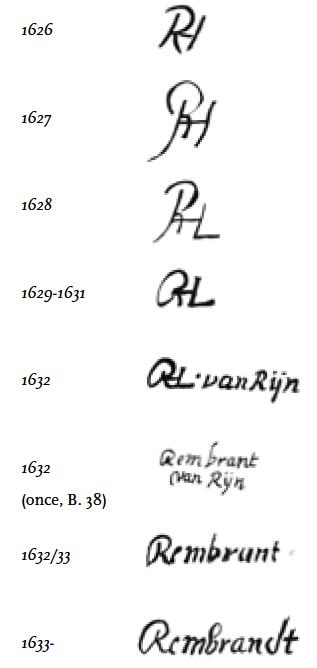
The challenges in attributing and understanding Rembrandt’s prodigious output stemmed from several factors: his extensive workshop with talented pupils who often copied or completed his works, the common practice of the time for artists to sign works by their students, and the fluctuating nature of historical documentation. This intricate situation meant that every attribution was a potential battleground, and even the most seemingly definitive works could be re-evaluated. However, a new era of research, combining cutting-edge scientific analysis with rigorous art historical scholarship, has begun to unravel these complexities, offering unprecedented clarity and dispelling many of these persistent uncertainties.
The Shadow of Uncertainty: Why Rembrandt's Oeuvre Posed Such Challenges
Understanding why unraveling Rembrandt's mysteries has been such a painstaking process requires a look back at the historical context. Rembrandt operated a highly successful workshop in 17th-century Amsterdam, a hub of artistic production. His studio was a school, a factory, and a gallery all rolled into one. Young artists flocked to learn from the master, and many of them, such as Govert Flinck and Ferdinand Bol, developed styles remarkably close to their teacher's. This meant that works could be:
- Direct copies: Students replicating Rembrandt's compositions for practice or sale.
- Collaborations: Master and pupil working on the same canvas, often with the student completing less significant areas.
- "Pastiches" or "After Rembrandt": Works created by students or followers in the master's style, sometimes signed with his name.
- Later forgeries: Deliberate attempts to deceive, created long after Rembrandt's death.
Compounding this was the scarcity and ambiguity of historical records. Unlike modern artists, Rembrandt didn't keep meticulous records of every commission or sale. Letters and inventories provide glimpses, but rarely the definitive proof needed for ironclad attributions. The sheer volume of paintings, drawings, and etchings associated with his name, coupled with these historical realities, created fertile ground for skepticism. This fertile ground eventually led to the formation of initiatives like the Rembrandt Research Project (RRP) in 1968, which, despite its groundbreaking work, also sparked considerable debate and re-evaluation, further highlighting the deep-seated nature of these rembrandt zweifel ausgeräumt concerns.
Revolutionary Techniques: How Science Illuminated the Canvas
The true turning point in settling decades of artistic debate and beginning to clear up Rembrandt doubts has come with the advent of advanced scientific and technological research methods. These tools offer an objective lens through which to examine the very fabric of a painting, revealing secrets hidden to the naked eye. By providing empirical data, they have proven instrumental in distinguishing the master's hand from that of his students or later imitators. Here are some of the key breakthroughs:
Material Analysis: Peering into Pigments and Panels
- Pigment Analysis: Scientists can now identify the specific chemical composition of pigments used in a painting. Rembrandt had a particular palette and preferred certain pigments at different stages of his career. Micro-samples analyzed using techniques like X-ray fluorescence (XRF) or scanning electron microscopy (SEM) can reveal if the pigments match Rembrandt's known materials and if any anachronistic pigments (those not available in his time) are present, which would immediately flag a work as a forgery. Furthermore, isotopic analysis of lead white, a common pigment, can often pinpoint the geological origin of the lead, helping to date works and connect them to known supplies in the Netherlands.
- Dendrochronology: For paintings on oak panels, dendrochronology – the study of tree rings – is a powerful dating tool. By comparing the patterns of tree rings in the panel to known chronological sequences, experts can determine the earliest possible date the wood could have been cut, and thus, the earliest possible date the painting could have been started. This has helped confirm the dating of many works and ruled out others as too early or too late.
- Canvas Weave Analysis: The specific weave pattern and thread count of canvas can act as a fingerprint. Researchers have compiled extensive databases of canvas types used in 17th-century Holland. Matching the canvas weave of a disputed painting to known works by Rembrandt or his students can provide strong evidence for or against attribution.
Imaging Technologies: Unveiling Hidden Layers
- X-radiography: X-rays penetrate the paint layers, revealing the presence of earlier compositions (pentimenti), changes made by the artist, and even the underdrawing or preparation layers. Rembrandt's working methods, characterized by dynamic changes and revisions, leave distinct X-ray signatures. This allows researchers to peer beneath the surface and observe the creative process.
- Infrared Reflectography (IRR): Infrared light penetrates darker paint layers, making visible the artist's underdrawing – the initial sketch made on the ground layer before painting. Each artist's hand is unique, and Rembrandt's free, confident underdrawings are often distinct from the more hesitant or academic approaches of his students. The absence of an underdrawing where one would expect it, or the presence of a clearly different style, can be a crucial indicator.
- Multispectral and Hyperspectral Imaging: These advanced techniques capture images across a wide range of light spectra, revealing details invisible to the human eye or even standard infrared. They can differentiate between various pigments, identify areas of restoration, and highlight subtle differences in brushwork that might otherwise be overlooked.
- 3D Scanning and Raking Light: High-resolution 3D scans can capture the minute topography of the paint surface, revealing the precise texture of brushstrokes and impasto. Raking light photography, which illuminates the canvas from an extreme angle, similarly emphasizes surface texture, making the artist's unique manipulation of paint strikingly evident.
These scientific approaches provide objective, measurable data that complement and often confirm or challenge traditional connoisseurship, playing a vital role in the truth about Rembrandt: settling decades of artistic debate.
Archival Goldmines and Stylistic Re-evaluations: Beyond the Scientific Lens
While science offers undeniable empirical evidence, the human element of art historical scholarship remains indispensable. New archival discoveries and refined methods of stylistic analysis continue to be critical in dispelling rembrandt zweifel ausgeräumt.
Unearthing Forgotten Documents
The relentless search through archives—church records, notarial deeds, inventories, court documents, and private letters—has periodically yielded invaluable new information. Imagine discovering a previously unknown contract for a specific portrait, explicitly detailing Rembrandt's involvement, or an inventory from a patron listing a particular painting and its acquisition date. Such discoveries can be game-changers, providing direct evidence where only conjecture existed before. Even re-examining existing documents with fresh eyes, cross-referencing names, dates, and locations, can reveal subtle connections that clarify ownership histories or commissioning details.
The Evolving Eye: Refined Stylistic Analysis
Stylistic analysis, though subjective, becomes incredibly powerful when informed by the objective data provided by science. Experts, armed with knowledge gleaned from technical imaging, can now discern subtle nuances in Rembrandt's brushwork, compositional choices, and psychological depth that differentiate his mature hand from even the most skilled pupils. For example:
- Brushwork Distinctives: While a student might imitate Rembrandt's broad strokes, the underlying structure, the economy of paint application, and the nuanced way light catches the impasto in an authentic Rembrandt often reveal a level of sophisticated control unmatched by others.
- Psychological Penetration: Rembrandt's ability to imbue his subjects with profound inner life is legendary. When scientific analysis confirms a painting's authenticity, scholars can then delve deeper into how that specific work embodies his unique empathetic vision.
- Evolution of Style: A deeper understanding of Rembrandt’s artistic development, informed by dendrochronology and pigment analysis, allows for more precise dating and a clearer picture of how his style evolved. This helps differentiate works from early periods (when his style was closer to his teachers) from his mature and late periods.
The combination of these approaches allows for a holistic understanding, where scientific data provides the factual framework, and art historical expertise fills in the narrative, context, and aesthetic appreciation. This synergy is ultimately how many long-standing Rembrandt doubts have been systematically addressed and resolved.
Practical Tips for Art Enthusiasts and Collectors
For those fascinated by Rembrandt and the broader world of Old Master paintings, understanding this rigorous process offers valuable insights:
- Appreciate the Multidisciplinary Approach: No single piece of evidence is usually enough. True authentication comes from a convergence of scientific data, archival research, and expert connoisseurship.
- Stay Informed: The world of art historical research is constantly evolving. Major museums and research institutions regularly publish their findings, contributing to the ongoing process of rembrandt zweifel ausgeräumt.
- Consider the Provenance: The history of ownership (provenance) is crucial. A continuous, documented history back to Rembrandt's time, or close to it, significantly strengthens a painting's case.
- Be Skeptical of "Miracle Discoveries": While genuine discoveries do happen, be wary of claims of "lost masterpieces" without thorough, transparent, and peer-reviewed research supporting them.
Conclusion
The journey to resolve the myriad questions surrounding Rembrandt's oeuvre has been long and arduous, reflecting the profound respect and critical scrutiny his work commands. The integration of advanced scientific techniques with meticulous art historical scholarship has finally begun to deliver definitive answers, systematically clearing up many of the enduring rembrandt zweifel ausgeräumt that once clouded our understanding. From identifying specific pigments to tracing the unique patterns of his underdrawings, new research has granted us an unprecedented glimpse into the master's studio and mind. This ongoing process not only secures the legacy of individual masterpieces but deepens our collective appreciation for Rembrandt's genius, allowing us to marvel at his work with a newfound clarity and certainty.